

17. Protein Needs Easily Met with a Vegan Diet
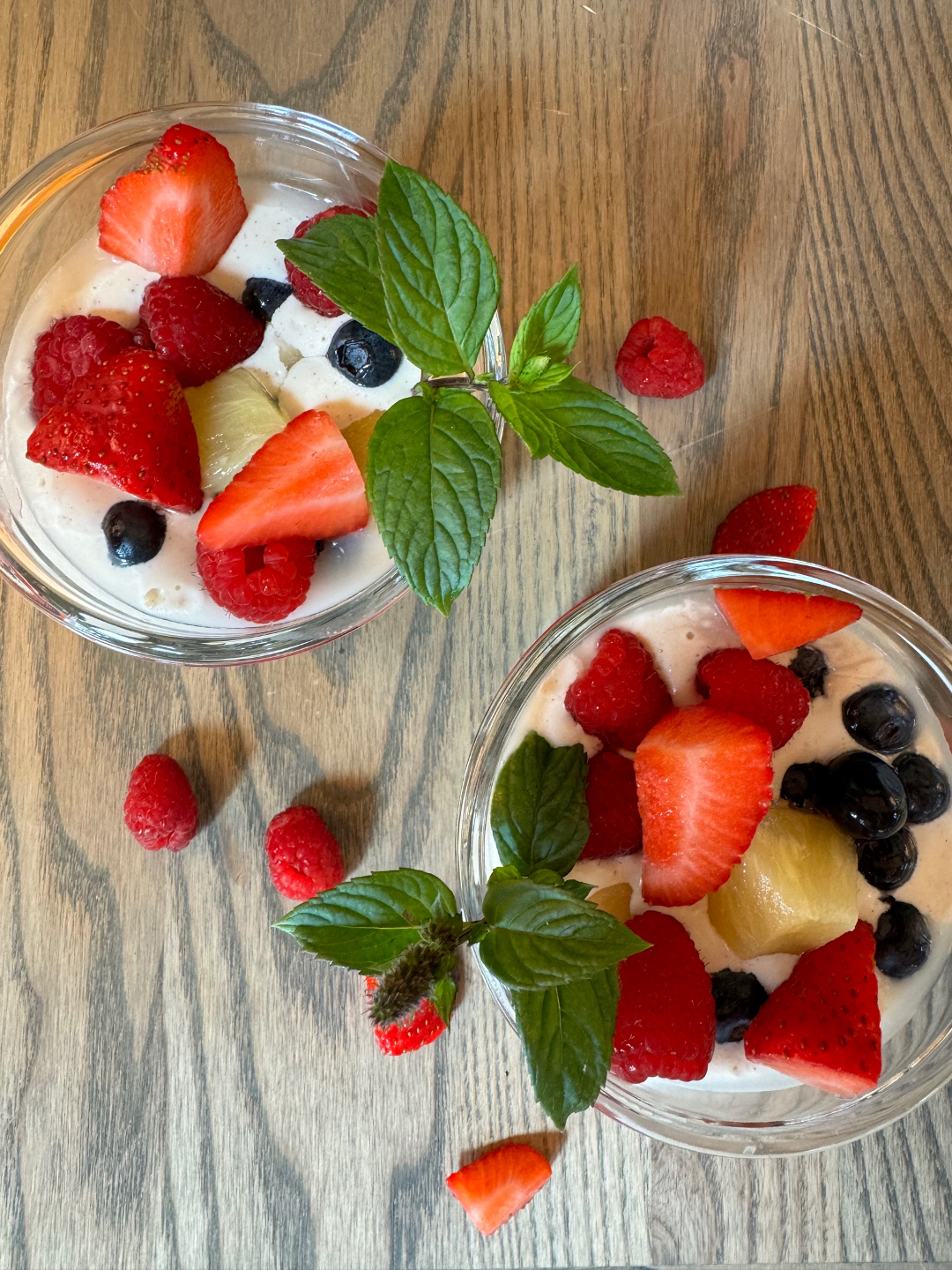
Overnight Oats with Cashew Sweet Cream is a great source of protein.
Why do people still eat meat and why has this habit not changed drastically in the recent past with so much research on the subject? We now know that consuming red meat (meat from all hoofed animals,) is a risk factor for developing heart disease and certain cancers such as colon and anal cancer. And too much animal protein in general can increase our risk of developing kidney disease. But most people still believe that protein from animals is the best source. Much research into vegetarian and vegan diets has been completed and what science is telling us is that most healthy adults can thrive by consuming foods that originate from plants. BUT, PROTEIN! Habits are hard to break! Yes, of course, eating meat, eggs, fish, milk, cheese and all foods from animal flesh and secretions have been labeled high protein foods, but these foods are not the only great sources of protein. Every time I visit a restaurant and order a salad, I am constantly asked if I would like to add some protein. I often ask which kinds of protein they offer, and the answer is always a form of meat, fish, eggs or dairy. Our culture screams animal protein. These high protein foods also pop up on every restaurant menu, and at barbeques! As a vegan, you feel like you cannot escape. If you were to study most restaurant menus in westernized societies, you would find very few items offered that haven’t had any animal-sourced foods added to them. When a loved one wants to stop eating all foods originating from animals, they are sometimes caste out as if they are not worthy to hold a place in the family. It’s crazy that the people who want to leave animals alone to live a life worth living and don’t want them to experience any sort of suffering are the ones labeled as the freaks.
Being kind to all kinds in our words and in our actions is one of the most noble and rewarding things humans can do.
What about our human nutritional need for protein? Isn’t it true that protein is an important nutrient and isn’t it also true that meat is a great source, along with eggs, milk, cheese and fish? Well, yes, of course these foods are high in protein. But they are not the only foods that have a good amount of protein in them. No, you will not automatically get sick and malnourished if you choose not to eat these foods. The craziest part about protein is that we don’t really need that much. How much protein do we need? Some suggest 10-15% of total calories. Others believe 20% or more should be our goal. Most experts say we need 0.8 grams per kilogram of body weight. To calculate the average, healthy person’s daily protein needs you simply take their weight in pounds and divide this by 2.2 to get kilograms. Then multiply kilograms by 0.8 to get grams of protein required daily. For example, a 120-pound woman weighs 54.55 kilograms. Take this and multiply by 0.8 to get 43.6 or 44 grams of protein. If you work out a lot or are an athlete, then you may need more protein to build up and/or maintain your muscle mass. Double this and you will have plenty of protein in your diet. Even if you multiply your kilograms of body weight by 1 or 1.2 you will most likely be consuming plenty of protein. You may be wondering about the essential amino acids and if plants have them, too.
Years ago, complimentary protein sources were a thing for vegans to take note of. Complimentary protein eating was when you would pair foods for consumption depending on their amino acid profiles. For example, Red Beans and Rice are a popular vegan dish. Both foods have a limiting amino acid and together they are complete. Red beans are limited in their amount of methionine. Rice is limited in lysine. It works out perfectly that red beans contain lots of lysine and rice contains lots of methionine. Through research we now know that all plants have all the essential amino acids, but in different quantities. Therefore, variety is the key. We no longer need to worry about eating these complimentary foods at the same time, rather we can consume them any time of the day and our body will sort it all out. And if you consume plenty of whole grains (oats, farro, brown rice, whole wheat, quinoa,) and plenty of legumes (beans,peas and lentils,) then there’s a good chance you are getting more than what you need in the protein department including all the essential amino acids. What other plant sourced foods are great sources of protein? Besides whole grains and legumes – which have 5-8 grams of protein per serving, other options are tofu, seitan, seeds, nuts, and soy milk. In fact, soy milk is so high in protein it contains almost as much as cow’s milk. It may seem like you could never eat enough food in a day to get the protein your body needs, but it is really not that hard. Here is an example of a daily menu that can, in total, add up to a lot of protein.
Breakfast: (36 grams)
1 cup of cooked oatmeal plus half cup mixed berries (13 grams)
2 cups of soy milk (15 grams)
2 tablespoons salted sunflower seeds (4 grams)
2 tablespoons vegan, chocolate covered almonds or pistacchios (4 grams)
Lunch: (33 grams)
2 cups Split Pea Soup with Farro (10 grams)
2 cups soy milk (15 grams)
2 slices whole grain toast or crackers (8 grams)
1 cup grapes
Dinner: (35 grams)
2-3 cups Tofu Stir Fry with seasonal vegetables, kale and rice (17 grams)
2 cups soy milk (15 grams)
Ice cream sandwich made from coconut milk or from almond milk (3 grams)
Mixed fruit for dessert
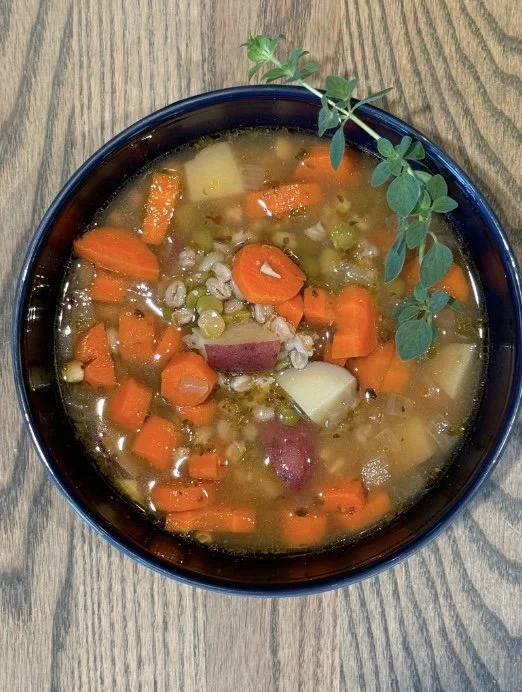
Split Pea Soup with Farro - it is simply delicious!
As you can see, it can be quite easy to consume over 100 grams of plant protein in a day. Some people even add a vegan protein shake to their daily needs and this can add 20 more grams of protein. Most people who are vegan and have learned how to consume a balanced diet, can easily fit in plenty of protein. How can you do this if you are allergic to nuts or soy protein? I must admit it can be a bit more challenging, and you would have to be able to tolerate beans, peas and lentils, but there are so many sources of alternative foods that you can try. Seeds are an amazing source of protein, but they also contain so many micronutrients like vitamin E, B vitamins, healthy fats, manganese, magnesium, calcium, iron and zinc. Seeds that I try to consume daily include flax, hemp, sunflower and pumpkin.
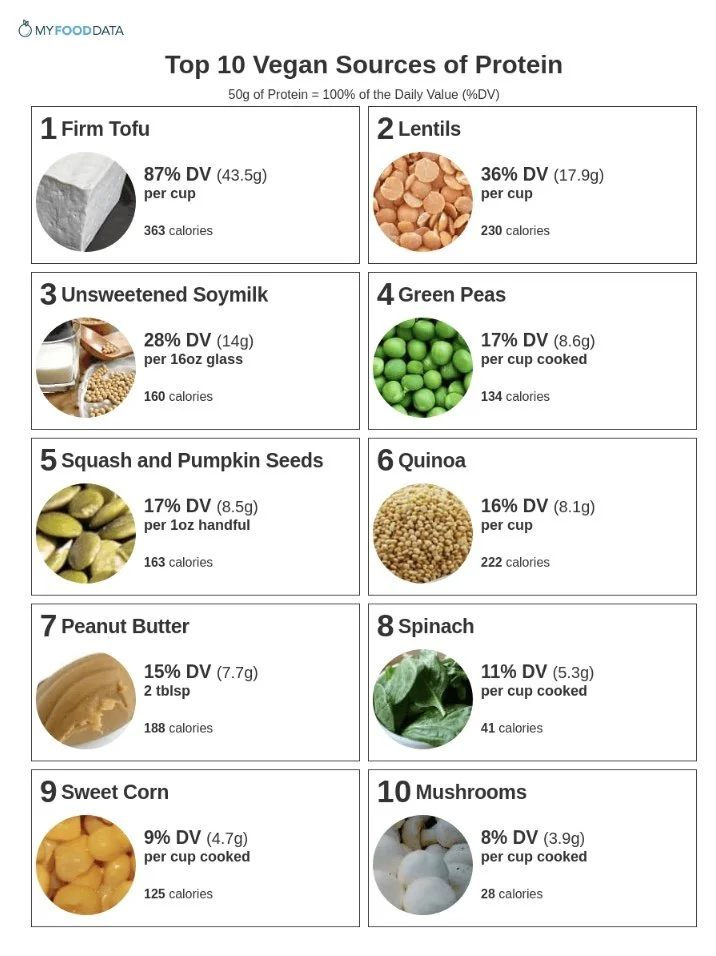
There are so many options when it comes to finding high protein plant-sourced foods.
I have been vegan for 17 years, am an endurance athlete and I get plenty of protein. I have no problem exercising for hours daily and have plenty of energy. But the best part of being vegan, in addition to not harming innocent animals is that I have decreased my risk for developing lots of preventable diseases. And for these two reasons alone, I will never return to consuming animal sourced foods ever again.
You can learn more about consuming a balanced vegan diet and daily protein needs by visiting these great websites.
Academy of Nutrition and Dietetics: www.eatright.org
Physicians Committee: www.pcrm.org
Forks Over Knives: www.forksoverknives.com