

13. Fats Are Essential for Human Life, But Not All Are Equal
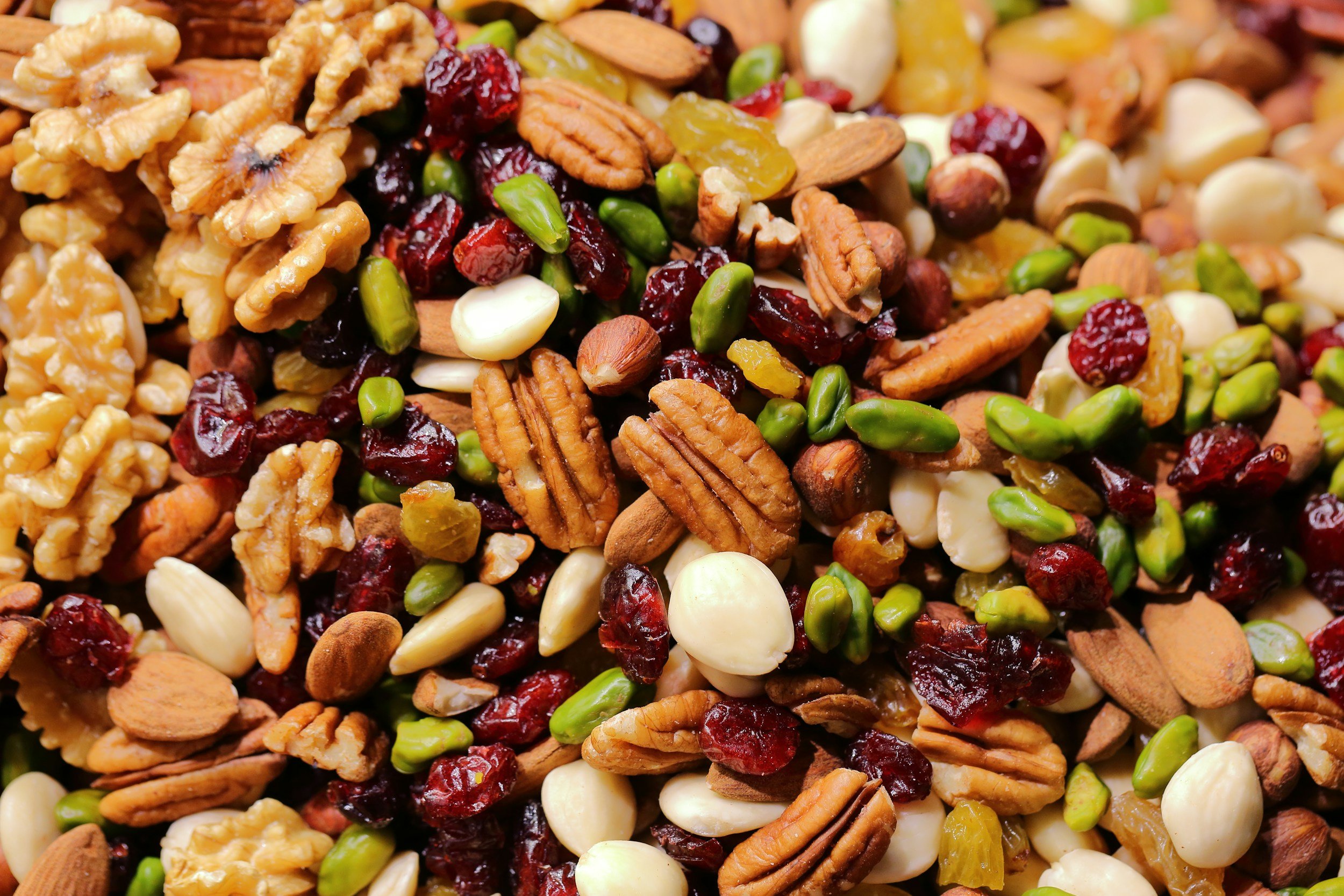
Healthy fats include seeds and nuts and their oils.
If you have been fortunate enough to have read some of my blogs so far, you may have noticed a theme. The theme is that, in general, some dietary fats are bad. If we eat too much or the wrong kinds, we can run into health trouble. Up until the past few centuries, humans didn’t have to worry too much about fat. The fat we ate hundreds of years ago came from just a few sources – fruits, vegetables, seeds, nuts or meat. Fat was rarely processed, refined or bottled. The meat humans ate was often harvested from active, wild animals.
https://www.sciencedirect.com/science/article/abs/pii/S0002822397007311
My how times have changed! Now we consume fattened animals that have been confined during their short-lived lives. We mostly consume the flesh of animals and fish that have been farmed and intentionally given food that will make them gain weight, quickly - a heavier animal is a higher profit animal. These animals have been bred to be extra-large, too. Chickens raised today for food compared to 100 years ago are not the same creature, not even close – they can hardly hold themselves up, since their bodies have increased by 5x in size, but their feet have not. Exercise might be good for us, but it is almost nonexistent in the farmed animals’ world, especially on factory farms. Antibiotics for weight gain is common in the farming industry. Since farmers have accepted and adopted this practice of taking a fattened animal to slaughter, how has this affected human health?
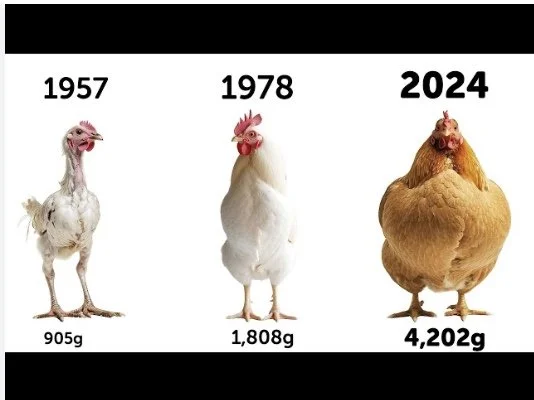
The change in the body size of chickens has been shocking. It is no wonder their feet struggle to hold them up.
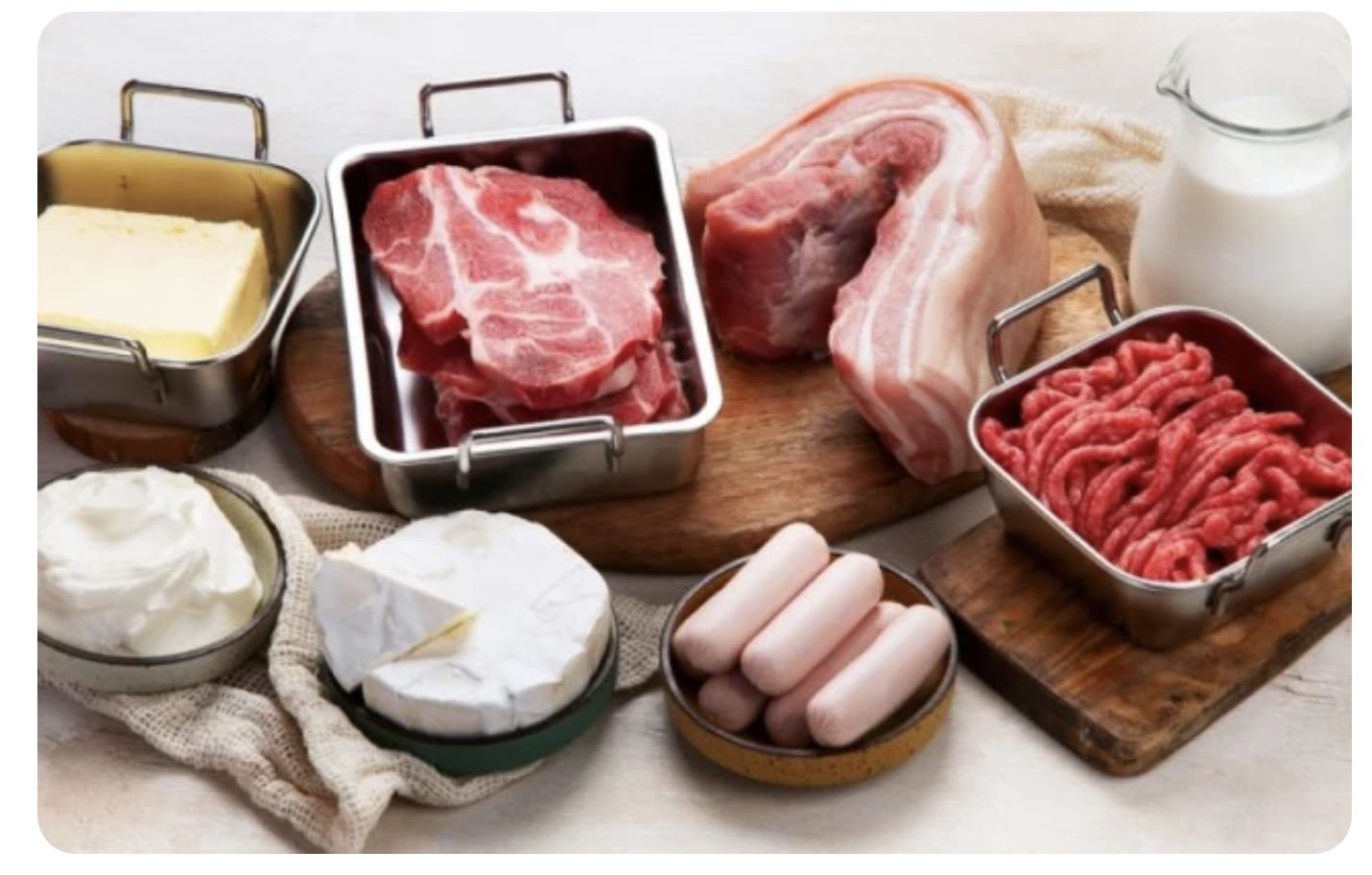
Animal fats should be limited to a very small percentage of our daily intake.
Eating animal fat in the large quantities that humans do has made us horribly sick. In the fat world of nutrition there are only three essential fatty acids – omega-6 (linoleic acid,) omega-3 (linolenic acid,) and conditionally essential arachidonic acid. So where do humans get these essential fats? Omega-3 fats can come from some types of fatty fish, like salmon, but also from plants. Plant sources include some cooking oils, seeds (flax, hemp and chia,) seaweed and algae. The fish eat the algae and seaweed, and then like magic, they have stores of this essential fat in their fat cells. Although fish have been advertised as the sole source of omega-3 fatty acids in the human diet – plants have them, too. Omega-6 fatty acids are sourced from vegetables, seeds and nuts - cooking oils are often considered a good source. Arachidonic acid can be manufactured in the human body when enough omega-6 fatty acids are present. Arachidonic acid is also present in animal-sourced foods.
https://www.heart.org/en/healthy-living/healthy-eating/eat-smart/fats/fats-in-foods
https://www.mayoclinic.org/diseases-conditions/heart-disease/expert-answers/omega-6/faq-20058172
Do humans require fat from animals? Although animal-sourced foods are high in arachidonic acid and fish can be a good source of omega-3 fatty acids, these foods are not required for human health. And these are not the only sources of these fats, as discussed above. Surprisingly, saturated fat from animals is not essential. Can humans tolerate saturated fat in their diet? Yes, but too much is disease promoting. Saturated fat can be turned into serum cholesterol. As serum cholesterol goes up, our risk for heart disease rises, as well.
https://my.clevelandclinic.org/health/articles/11920-cholesterol-numbers-what-do-they-mean
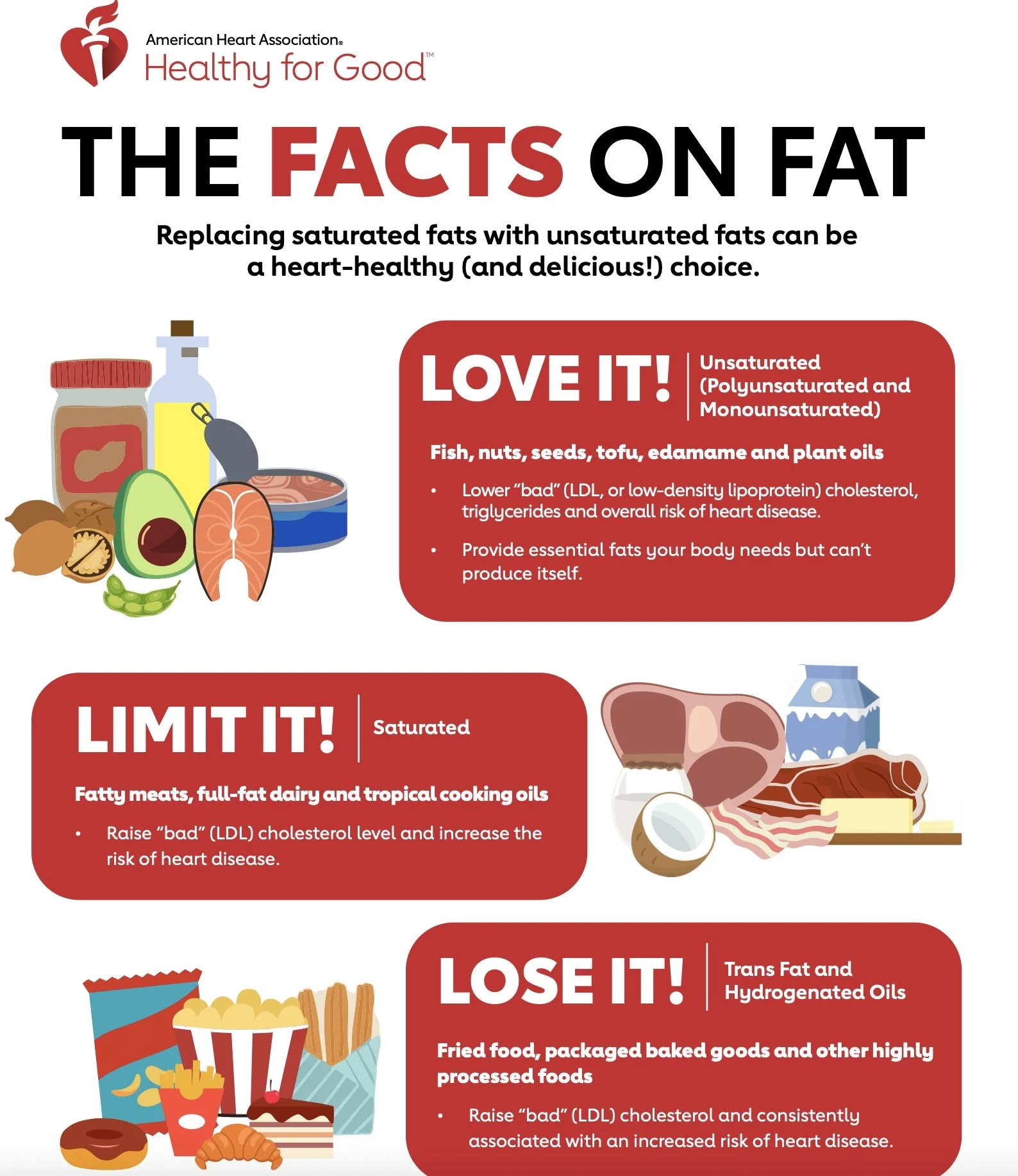
American Heart Association.
Why do we still get sick even if we think we are doing everything right when it comes to fat? Mostly because we eat too much of the wrong kind and not enough of the essential kind. Humans consume on average 35-40% of total energy from dietary fat – some consume even more. The recommendation from most experts is 25-35% for the average healthy adult. This amounts to about 500-700 calories from fat if consuming a daily, 2,000 calorie diet. The tricky part is that we eat a lot of foods that contain fat, like French fries, milkshakes and fried chicken, but we don’t always know how much fat is in a serving. One tablespoon of butter, oil or fat drippings from meat equals 100 calories. One cup of whole milk usually contains 150 calories and 72 calories (about half) come from fat. Now what if you have 3 glasses a day? That’s 216 calories from fat and you are already getting close to half of your total, daily allowance without considering meat, eggs, and fish. The American Heart Association recommends saturated fat (fat from animals,) be limited. Saturated fat has been shown to be highly disease promoting when too much is eaten. They recommend limiting all animal fat to less than 6% of total calories – that’s 120 calories from animal fat on a 2,000 calorie diet. Cheeseburgers and steaks wouldn’t be allowed – neither would 3 glasses of whole milk. And this is where the controversy begins. Humans love their meat, eggs, dairy and fish so much that they have a hard time parting with it. But they also scratch their heads when they fall ill from a heart attack. Some people can be just fine if they eat a high percentage of animal-sourced foods. They complain that the recommendations are too limiting. But if you were someone who has lost a loved one from this terrible disease, you might think twice.
https://www.heart.org/en/healthy-living/healthy-eating/eat-smart/fats/the-facts-on-fats
How is dietary fat related to disease development? Studies over decades have shown that fat, and specifically, saturated fat influences the production of serum cholesterol and can also be pro-inflammatory. As many of us know, it has been recommended that we get our cholesterol checked periodically to be sure it doesn’t get too high. Total cholesterol should normally be under 200mg/dL for most healthy adults and LDL (low-density lipoprotein) should stay under 100mg/dL. The development of heart disease and vascular disease in general, usually begins with atherosclerosis and/or high blood pressure. When cholesterol is maintained above recommendations the build-up of plaque on arterial walls can accelerate. Inflammation triggered from some of the high fat foods we eat can take a toll on our fragile bodies and could encourage the development of autoimmune disorders and dementia. Although more science is needed in these categories, it would be prudent to limit your intake for these reasons as well.
https://health.clevelandclinic.org/anti-inflammatory-diet
Luckily, we now have statins that are prescribed to lower our cholesterol to acceptable levels, and we have drugs that can help lower blood pressure, too. But interestingly, there is another less common, but just as effective treatment that can be used to reverse the development of atherosclerosis - following a plant-based diet. Plant foods are vital to human health and getting in the right fat is vital as well. In the 1980’s Dr. Caldwell Esselstyn, MD, was a surgeon at the Cleveland Clinic in Cleveland, Ohio. He had watched so many sick people show up at the hospital after a heart attack, who needed life-saving surgery, immediately. Many perished. He often wondered if the food they were eating had made them ill. He experimented with reversing heart disease by putting people with atherosclerosis on a strict plant-based diet. And guess what happened? Yes, you guessed it, their markers for heart disease disappeared. Dr. Esselstyn was so impressed with his results that he wanted to shout it out to everyone, that a plant-based diet was the key to preventing our number 1 killer in the western world. And that, yes, maybe eating animal flesh was the culprit. He wrote a book to help people understand his dietary interventions. The book is called, Prevent and Reverse Heart Disease. He also helped to create the documentary, Forks Over Knives. A true pioneer in the battle against vascular disease. Fun Fact: Dr. Esselstyn also happens to be a phenomenal athlete – he won a gold medal in rowing at the 1956 Summer Olympic Games in Melbourne, Australia. Another Fun Fact: Wendy Raymond (me) will be highlighted in the 2026 summer edition of the magazine, Forks Over Knives, as a plant-based eating Success Story. Not only has plant-based eating allowed me to thrive as an endurance athlete, it has also helped me prevent my own development of heart disease, the number one killer of humans, and for that I will forever be grateful.
https://www.forksoverknives.com/wellness/7-ways-milk-and-dairy-products-are-making-you-sick/
https://www.forksoverknives.com/the-film/
I hope this blog post was helpful and gave you some insight into the world of nutrition and its relationship with disease progression. Although I wish I could say that eating animal fat was only detrimental because of the potential for cardiovascular disease development, that is sadly not the case. There are far more issue with fat than what has been discussed so far. So, tune in to my blog next week to learn more!