

12. When Did it Become Bad to Take a Stance for the Ethical Treatment of Animals? When Protein in Our Diet Trumped Ethics
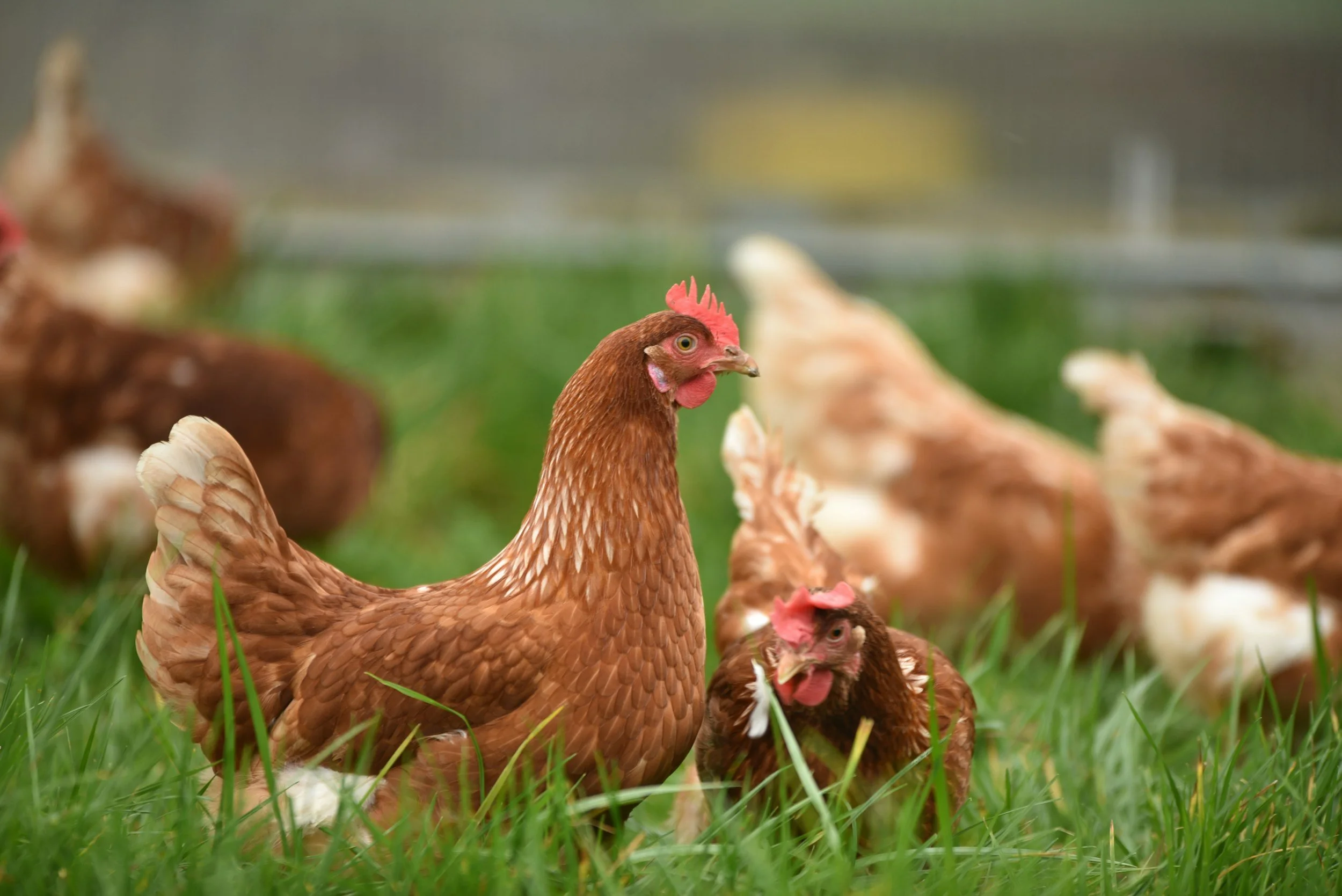
Freedoms for all animals raised for food are nonexistent or limited.
Our protein craze has been accelerating dramatically over the past few decades. This push for people to consume more, and more, animal meat in the name of health has come from powerful and greedy organizations that profit from higher sales and from the lobbyists that they hire to influence politicians who make the laws and set health standards. At a time when most cardiac doctors, nutritionists/dietitians, and nutrition scientists are advising us to reduce our dependence on these foods, the industry keeps pushing us in the other direction. The saddest part about this push is that it is solely based on profit margins. The welfare of the animal has been left in the dust.
https://pmc.ncbi.nlm.nih.gov/articles/PMC3045642/
This push for more animal protein sourced foods is a more recent phenomenon. Could it be a result of advertising and scare tactics? Yes, of course, and people are listening, unfortunately.
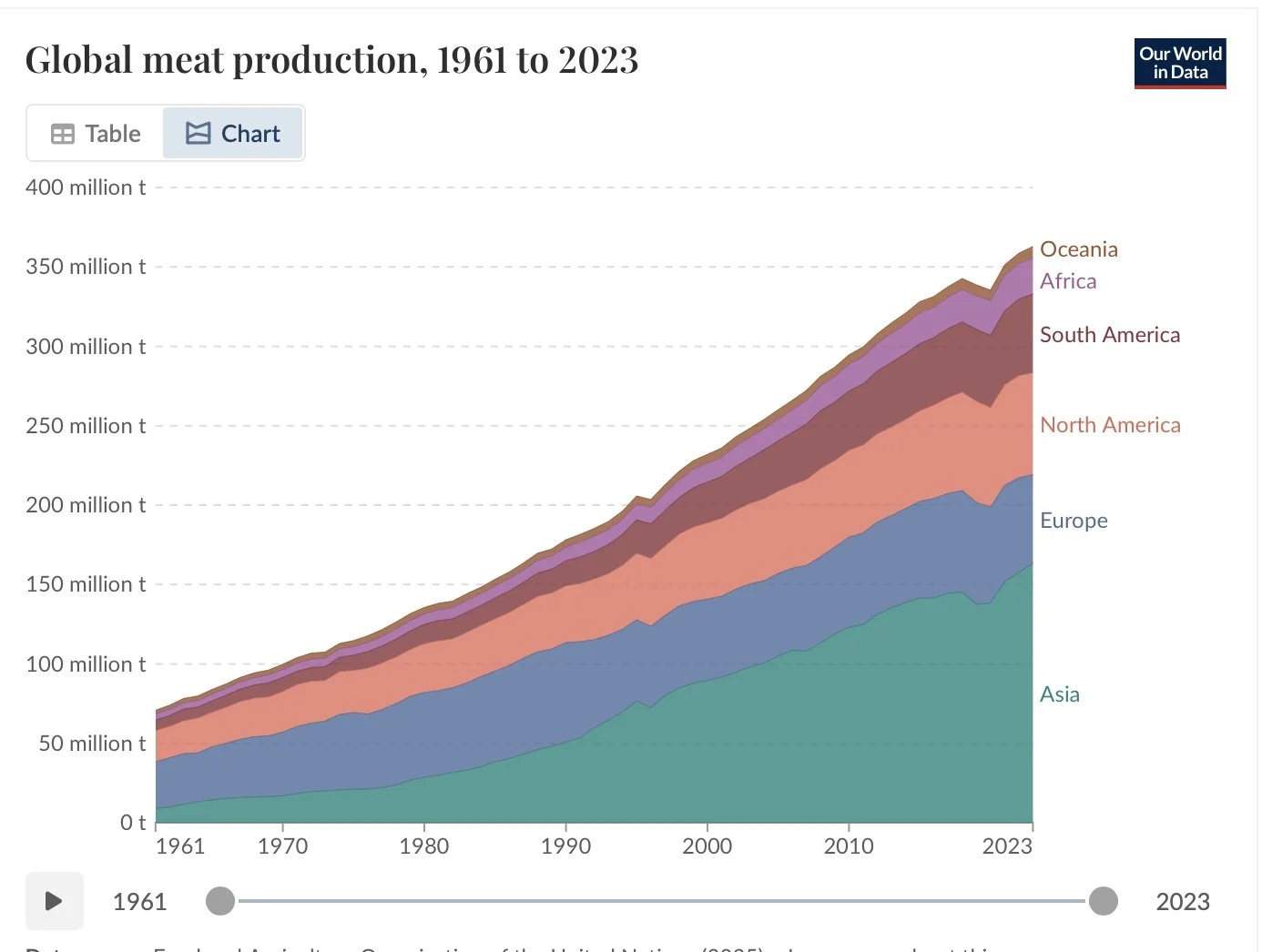
Our World Data
In the United States, most of our dietary “protein” comes from animals and sea creatures that have been taken from their natural habitat and placed in aquacultures or concentrated factory farms. This, at a time when most, if not all, of our dietary protein should come from high protein, high fiber plants. Every part of the animals’ lives has been completely upended and controlled by humans. Not only are these beings confined and unable to realize any resemblance of freedom, but the concentration or limited space creates pollution and waste, contamination and disease. It also creates very sad animals. Nothing good comes from eating them, especially in the system that we have created for them. How did we get here?
https://insight.dickinsonlaw.psu.edu/cgi/viewcontent.cgi?article=1155&context=dlr
Humans have not always insisted on living this way. When did we decide we needed so much control over the animals we have labeled as high protein food? Factory farms and CAFO’s (concentrated animal feeding operations) are a more recent development in human history. Only in the past few hundred years have we leaned into so much control over other species. Let’s take a closer look at factory farming, in general, and our choice to consume more, and more, highly perishable, high protein foods.

Deer hunting is a popular sport in the United States.
Hunting animals for food has been around for thousands of years. Humans have used animals for their skins, fur and for the meat that they provide. Fishing can be dated as far back as hunting land animals. Whales were hunted almost to extinction just a hundred years ago. Humans used the whale blubber to keep the oil lamps on and running without interruption. In the 1980’s, the International Whaling Commission created a world moratorium for commercial uses on whale hunting to help these amazing creatures recover from coming way too close to extinction. Since modern-day electricity has taken the place of whale blubber and oil lamps, the whale population has been bouncing back, but we are still far from recovery for some species. The days of farming individual animals and individual fish are long gone. Although some people still hunt and still fish on their own, the primary source of food is no longer provided by these activities. Most humans don’t want to spend hours searching for a fish or a deer, so they have thought up a diabolical way to make food producing easier and more productive with less expense. The lobbyists have gone too far though in their quest to create a growing industry of despair, cruelty, and so much destruction. They have lobbied to change the laws to be sure nothing stands in the way of their profits, including the welfare and health of the animals that they slaughter for food. Absolutely no protections exist for farmed animals. None. Why is this a concern for the average human being? To the average human, these thoughts don’t even cross their minds. These huge animal operations do not operate in a vacuum – they can affect what is sprayed on the crops grown to feed the animals and they can pollute nearby water supplies. When chemicals are used on our food or the animals’ food it doesn’t always stay put. These chemicals can pollute nearby land, lakes, and streams, and can get into the water supply underground. Besides the businesses that push for us to eat more meat, what else has made meat-eating easier?
Ice houses were used for centuries to keep food from spoiling by keeping it cool and safe. When indoor refrigeration became common in our homes around the turn of the 19th century, our desire for more perishable foods increased. Before 1900, our selection of food was limited – usually only foods grown nearby were attainable. There were not many major food companies churning out items that could sit on our shelves for weeks or even months. Refrigeration became more common in western countries in the 1940’s and 1950’s. Refrigerators with freezers became an appliance everyone had to have. The desire to eat more meat seemed to coincide with the use of indoor refrigeration. We have almost doubled our consumption of all sources of protein since 1900.
https://www.whirlpool.com/blog/kitchen/history-of-the-refrigerator.html
The four major meat producing organizations are – Tyson Foods, Cargill, JBS USA and National Beef Packing. These four control most of the beef industry. Smithfield Foods and Hormel control the poultry and pork industries. Now let’s look at who owns these companies. Tyson Foods is owned and mostly controlled by the Tyson Family. Tyson was founded in 1935 and began as a poultry business before expanding to beef and pork. Cargill is owned by the descendants of founder William Wallace Cargill and has been a large privately held company since 1865. JBS USA is a subsidiary of JBS S. A. which is the world’s largest meat producing company. JBS S. A. is owned and controlled by the Brazilian Batista brothers, Joesley and Wesley. JBS USA is based in Greeley, Colorado – the former Swift & Company. JBS S.A. operates in 250 or more places throughout the world. National Beef Packing is also Brazilian owned. Smithfield Foods in Smithfield, Virginia, is owned by the WH Group, a publicly traded Chinese company. Hormel is owned by The Hormel Foundation, set up as a non-profit. Not only are half of our meat producing companies based in and owned by other countries, a fraction of our agricultural land is also owned and operated by other countries. Foreign ownership of farmland in the US has grown substantially in the past few years. From 2010 to 2023, 21 million acres have been sold to other countries. With so many enormous companies churning out burgers, steaks, pork chops and chicken wings, we never have to go without. And we may just be adding more, simply because, when a food is readily available, it is readily consumed. But this consumption comes at a cost. JBS S.A. in Brazil has been one of the leading contributors to converting Brazilian rain forests to farm fields to feed their cattle. How many trees must be chopped down to satisfy our hunger and lust for animal protein-rich foods?
https://www.industryselect.com/blog/the-largest-meatpacking-plants-in-the-us
How has protein consumption changed throughout the years? The consumption for the average human being and average American is now off the charts. In 1900 Americans consumed about 150 pounds of meat per person per year, consisting mostly of beef and pork. By 2025 we consumed 225 pounds per person per year, consisting mostly of chicken, with less beef and pork. The United States is at the top of the list of top consumers of meat. Few other countries consume more, and few other countries are as sick as we are of degenerative illnesses. And we are not slowing down.
We now know that meat eating has been related to poor health outcomes, (according to the American Heart Association and the American Cancer Society.) The push for more meat would have us becoming unhealthier, according to our leading health experts. Why has the United States Health and Human Services (HHS) gone so far as to encourage us to consume even more animal sourced foods than ever before? It is hard to know what their goal is since getting healthier probably will turn out to be elusive. The only other reason to encourage more meat consumption would be to benefit those who profit from the business. And we now know that some of Robert Kennedy Jr’s advisors are directly from these industries. This all seems to add up. Even with statins to lower cholesterol and GLP-1’s to help us to lose weight - we are still dying of heart attacks, cancer and dementia.
So, what do we do now? The power has always belonged to the people. If we don’t like what is being sold in our country, we can always refuse to buy it. Refuse the animal torture, refuse the pollution, refuse the unhealthy consequences, refuse all the negative aspects of factory farming. In the end, it will be the people who decide. Now that we know we can live a healthy life without any animal-sourced foods on our plates, we should follow the guidance of most health practitioners. The downside is that all this meat and fish eating has become part of our lives, part of our culture and part of our identity. Maybe we no longer need it nutritionally speaking, but we need to find a way to not need it socially, mentally and culturally. This is where what we do collides with what we want. Making the connection that animals treated in opposition to our moral compass is bad for all of us. If we wouldn’t want our pets to live in squalor, why would we want other animals put in such a harmful and disgraceful living situation? We are all responsible for what we have done and more importantly to fix what we have done.