

8. 2025 US Dietary Guidelines - Controversy on What is Healthy
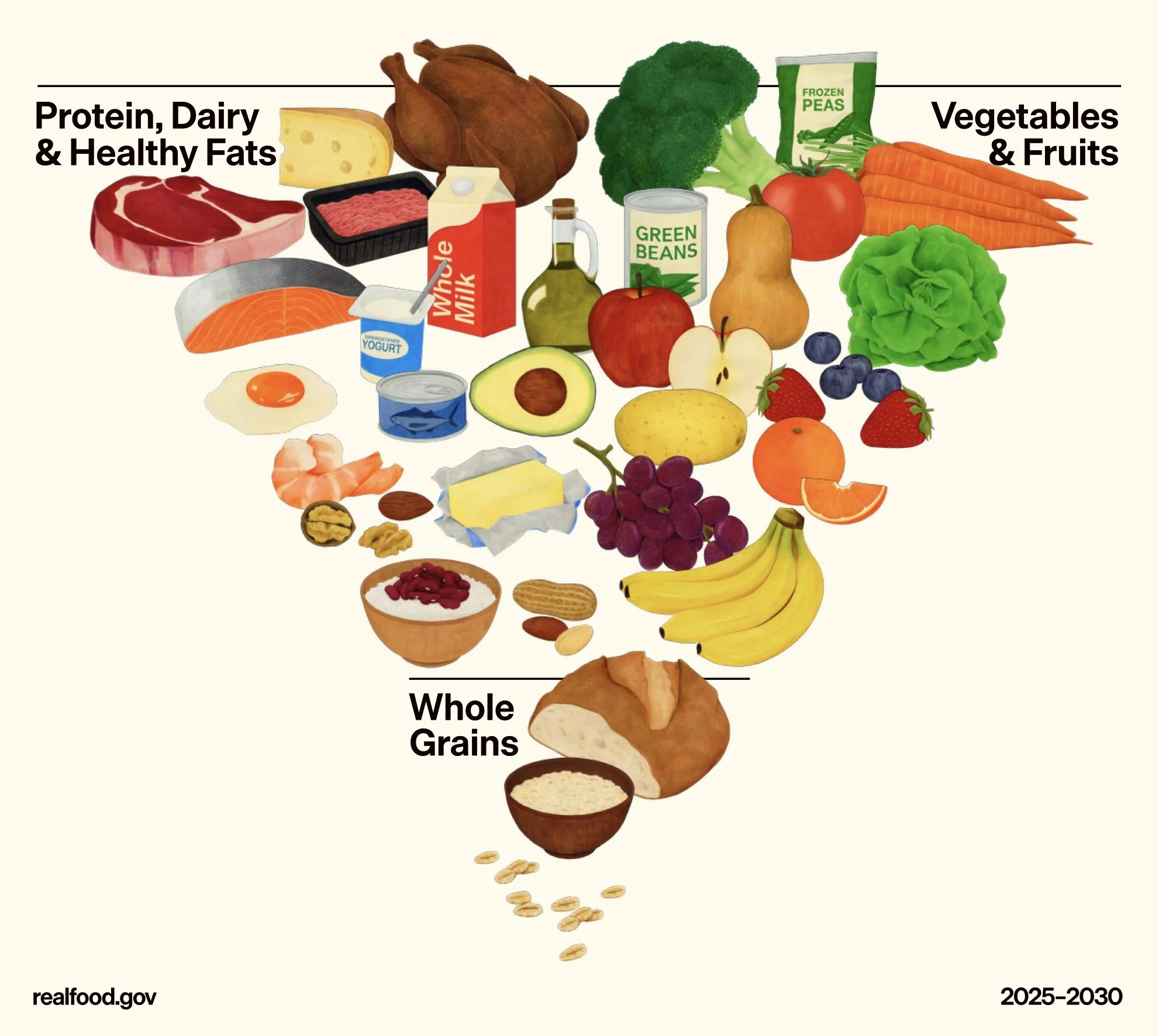
2025 USDA Dietary Guidelines. https://www.dietaryguidelines.gov
Americans (along with people worldwide) want to be guaranteed that the food they buy in the grocery store won’t make them sick. They want to know what the science says when it comes to which diet is best for health and longevity. We all want our children to grow up to be big and strong or at the very least be healthy. Even if we choose the right foods, should we worry if there are toxic chemicals in them? Are the foods we have purchased treated with the utmost care and are they cleared of dirt, chemicals, and microbes that could potentially make us sick? When we rely on others to keep our food safe, it can sometimes be hard to trust. When nonscience people make decisions that should be based on science, but are instead based on a hunch, we should be alarmed. RFK Jr. is the Secretary of the American Health and Human Services (HHS) department of the federal government. He has enormous power and sway over how Americans will choose to eat. Having been appointed to this position he has put in his “2 cents” on what he believes should be on Americans’ plates. He has decided, since he deems himself healthy, and coincidentally, he eats lots of meat, and drinks raw, whole milk, that everyone else should, too. There is just one little problem. He didn’t look at or listen to the science before he decided to change the recommendations. If he had, then he decided to ignore it.
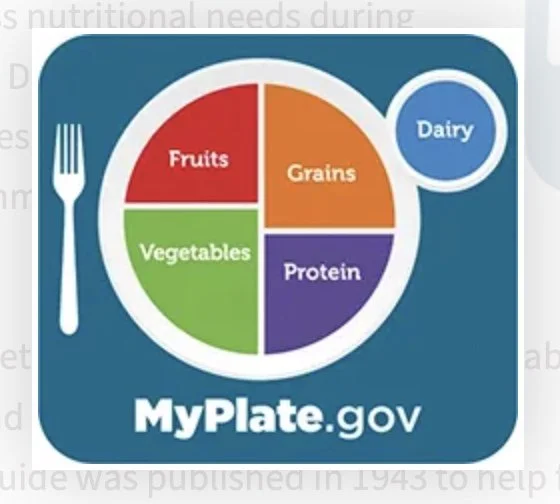
My Plate was developed in 2011 to guide Americans on how to eat healthy.
Let’s take a peek at the science. The number one killer of Americans and people worldwide is a heart attack. One of the biggest risk factors for a heart attack is high LDL-cholesterol which is increased by consuming more saturated fat. According to the American Heart Association and its recommendations on fat consumption, it is impossible to reconcile the strict adherence to the recommendation to limit saturated fats to less than 10% of total calories - and a new dietary food guide that tells us to prioritize foods that are high in saturated fat. If you suggest, like RFK Jr. has, that we should be eating more red meat and whole fat dairy, you have missed the latest reports on the science that have proven that we should not eat these foods, or at least, we should be limiting them. The latest research clearly shows that foods that are high in saturated fat and cooked at high heat - can increase the risk of not just heart disease, but many other preventable diseases. (See my blogs on both Dairy and Meat for further reading.) So, what should we do? And where do we go for the answers? Food recommendations just got a whole lot more complicated.
For decades, the US government has provided its citizens with a guideline for healthy living based on what the latest research at the time revealed. The Healthy People 2020 Guide suggests we add more nutrient dense foods. Healthy People is comprehensive and tries to guide us on how to prevent disease with diet and beneficial lifestyle activities based on the latest research. It is revised every 10 years and was last revised in 2020. If you would like to read up on the latest accurate and helpful diet and activity advice, then this would be a great place to begin.
https://www.cdc.gov/nchs/healthy_people/hp2020.htm
The US Dietary Guidelines, on the other hand, are revised every five years. This guide focuses just on foods and food groups to better help people choose the foods they need to consume to be healthy. The latest revision of the Dietary Guidelines just came out a few days ago. Many of us remember the old Dietary Guidelines in the form of the Food Guide Pyramid that was in place decades ago. In the past, this guide backed a base of fruits, vegetables and whole grains. The USDA updated this guide to My Plate in 2011. The Dietary Guidelines were updated once again a few days ago led by Robert F. Kennedy Jr. at the HHS. Instead of having whole grains, fruits and vegetables, (which should be the majority of what we eat,) at the base and meats and fats at the top, to be limited, we now have meats and fats being encouraged. The exact foods that contain the most saturated fat and oftentimes create high levels of LDL-cholesterol that in-turn increase our chances for vascular and other diseases. And oddly, the new Dietary Guidelines are at odds with the Healthy People Guide of 2020. Thank goodness vegetables are still at the top of both guides of which should be consumed the most. But we all need to remember that whole grain carbohydrates and simple sugars are not the same, not even close. Simple carbs should absolutely be discouraged, but whole grains are beneficial and are essential to a healthy diet and healthy lifestyle. You can refer to my blog on carbohydrates for more details. You can also read up on what other nutrition experts are saying about the new guidelines here.
https://www.cnbc.com/2026/01/09/experts-weigh-in-on-rfk-jrs-new-dietary-guidelines.html
Typically, before the Dietary Guidelines are updated, the best and brightest nutrition experts get together and hash out the most recent research to base the new guidelines on. They then try to decipher which foods are out and which are in for a better shot at a healthy life. One of the most studied food components is saturated fat and fats in general - so many studies with an overwhelming message. The research is clear - saturated fat which comes primarily from animal sourced foods, is one of the most pro-inflammatory foods you can eat. But when it comes from processed meats that are heavily preserved, the health risk of consuming these foods increases. Processed meats when cooked create toxic substances that are considered carcinogenic. Red meats (meat from all hooved animals, cows, horses, pigs, sheep, goats,) when cooked, have been labeled as likely carcinogenic. So, if it is pro-inflammatory and it causes cancer, why is it at the top of the new Food Guide Pyramid now, and encouraged? The HHS Secretary thinks these foods are so rich in nutrients that the fat shouldn’t matter. But the fat does matter. Most nutrition experts do not condone this, but we don’t have an expert leading the department. So here we are. Unfortunately, people will get sick and people will die because of this altered advice. What are we to do? Well, the first thing is to listen to people who know what they are talking about and don’t listen to those who don’t. Although this is straightforward advice, it can be hard to know who has our best interests at heart and who is giving advice on a whim. With such a U-turn on nutrition advice, it’s no wonder conspiracy theories begin to try to explain the motivation behind such a move. Oftentimes, these theories revolve around businesses making a buck and hospitals and doctors staying in business. Sick people keep some businesses humming right along. I don’t like to follow this path of darkness, so I stick by my principals and just listen to those who are the best in their field of study. One of these people is Christopher Gardner from Stanford University.
"I'm very disappointed in the new pyramid that features red meat and saturated fat sources at the very top, as if that's something to prioritize. It does go against decades and decades of evidence and research," says Christopher Gardner, a nutrition expert at Stanford University. He was a member of the Dietary Guidelines Advisory Committee, which reviewed all the nutrition evidence. He's in favor of increasing plant-based sources of protein, such as beans, rather than emphasizing animal protein. Unfortunately, his advice fell upon deaf ears.
Both the American Heart Association and the Academy of Nutrition and Dietetics, which includes thousands of nutrition professionals, point to evidence that excess saturated fat is linked to heart disease. And the new guidelines do still include a long held recommendation to limit saturated fat to less than 10% of your daily calories. The problem is that this fat is impossible to limit to less than 10% of calories if you are consuming a good amount of high fat foods.
https://www.npr.org/2026/01/07/nx-s1-5667021/dietary-guidelines-rfk-jr-nutrition
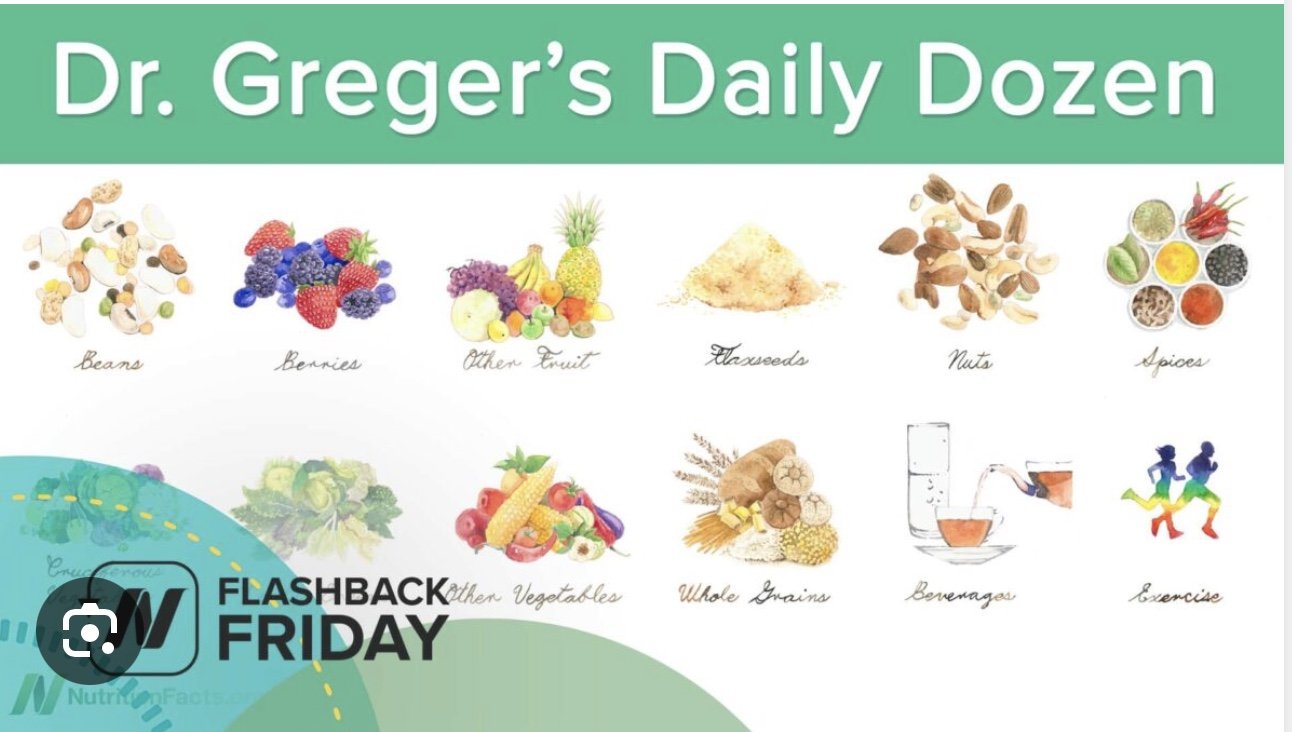
We have come so far when it comes to diet advice and science. The first food guide in the United States was developed way back in the 1894 and was based on what healthy people ate and not necessarily what science showed. There was still so much we didn’t know yet. This first guide focused on nutrient dense foods and to avoid consuming foods with a low-quality score such as high fat and high sugar foods. Then in the 1900’s more individual vitamins were discovered and studied. A focus on food groups was developed to give people an easier way of getting in the nutrients they needed. In 1916 the first food groups food guide was developed, and five foods groups were advised – these were, milk & meat; cereals; vegetables & fruit; fat and sugar. The USDA’s Basic Seven came out in 1943 and included these seven foods – green & yellow vegetables; oranges, tomatoes & grapefruit; potatoes, vegetables & fruit; milk & milk products; meat, poultry, fish & eggs; bread flour & cereals; and lastly, butter & margarine. The. First comprehensive Healthy People: The Surgeon General’s Report on Health Promotion and Disease Prevention guide was issued in 1979. Since the Healthy People guide has not had any political influence and has not had much business coercion either (that we know of,) it is a safe place to begin your health journey. You can also follow Dr Greger’s Daily Dozen advice on how to avoid the pitfalls of unhealthy fats and decrease your risk of developing preventable diseases.
Someday we will look back and realize how foolish we once were. We may even live in a country and culture that does not consume dairy, meat, eggs or fish, for many unsavory reasons. When that day comes, it will be interesting to watch the hospitals empty out. We will enjoy watching people spend their money on their loved ones instead of on their medications and health care. Farmed animals will be free to live a life of value and happiness. What a beautiful day that will be!